Showing posts with label Season Reviews. Show all posts

Thursday, April 24, 2014

Season Review: Parks and Recreation - Season 6


Considering Parks & Rec is a show that spent most of its life perpetually on the bubble, it's sort of a miracle that it has lived long enough to feel like it's overstayed it's welcome. But that's how it felt for large parts of its sixth season, a season that felt a little bit like glorified fan fiction in parts. Parks has naturally wrapped up its story so many times at this point - from the Harvest Festival, to Leslie winning the City Council election, to Leslie and Ben's wedding - that it's increasingly feeling like the writers of Parks & Rec are spinning in circles trying to figure out what more they can say about these characters. This became incredibly obvious throughout this season as the show relied on several weary old sitcom chestnuts for its plot developments. The show had three pregnancy plots this year, plus countless plots that felt like a rehash of the "Leslie gets passionate about something, people turn her down, she steamrolls over them but wins them over with her charm" plot structure that the show has done countless times since its conception. There were some highlights over the course of the year - such as the genuinely great season opener in London, and the really sweet farewell to Ann and Chris - but for the most part, Parks Season 6 felt like a show that was around only because it had to be, not because it had anything left to say.

Then, in the last few minutes of the season, everything changed. And now, for the first time, I have no idea where we're going to go next.

I've seen a lot of people take issue with the show jumping ahead three years in the finale. I get it. Time jumps are something I'm always a little uneasy with, for the very reasons that people have pointed out. Yes, it's strange that, after tracking these people so closely over the past 5 years, we're now skipping right over 3 entire years of their lives - lives that include milestone events like new jobs and pregnancies and children. And yes, the show went through some strange hula hoops to get to its desired endpoint. (Having Leslie demand that the National Parks Department set headquarters right up in Pawnee simply because she doesn't feel like moving is just too much, and it feels unnecessary considering they went ahead and rebooted the shows' entire premise anyway). But I kind of love that the show is brave enough to just go ahead and restart its entire premise, and it follows an interesting trend this year of middle-aged sitcoms realizing they need to shake things up and taking bigger-than-usual experiments with their status quo to do so. Parks Season 7 could be a disaster, quite frankly. It has a lot to juggle, and it could just outright fail to do so, in the way that something like Scrubs' final season did. But it could also take the lead of Community and Archer and be a serious breath of fresh air after a season of diminishing returns. And even if it's not, I'd rather see a season that tried and failed than another year that recycled old plots and sitcom tropes over and over again, like the show would likely do if it kept its status quo for another year. Sure, it means we miss out on a few aspects of the characters' lives, but it's a small sacrifice to make for what I think will be ultimately a much more interesting show. (Also, if your idea of a good season is one that includes a Leslie Knope pregnancy plotline, we may have very different views of what a good season of television is). This finale gave was a very nice way to end Parks & Rec as we know it, a show that was once one of the best things on television. But this season has proved that the story of that Parks & Rec is over, and while I'll always treasure the memories I had with that show, I'm excited to see what's next.

Final Grade: B

Tuesday, April 22, 2014

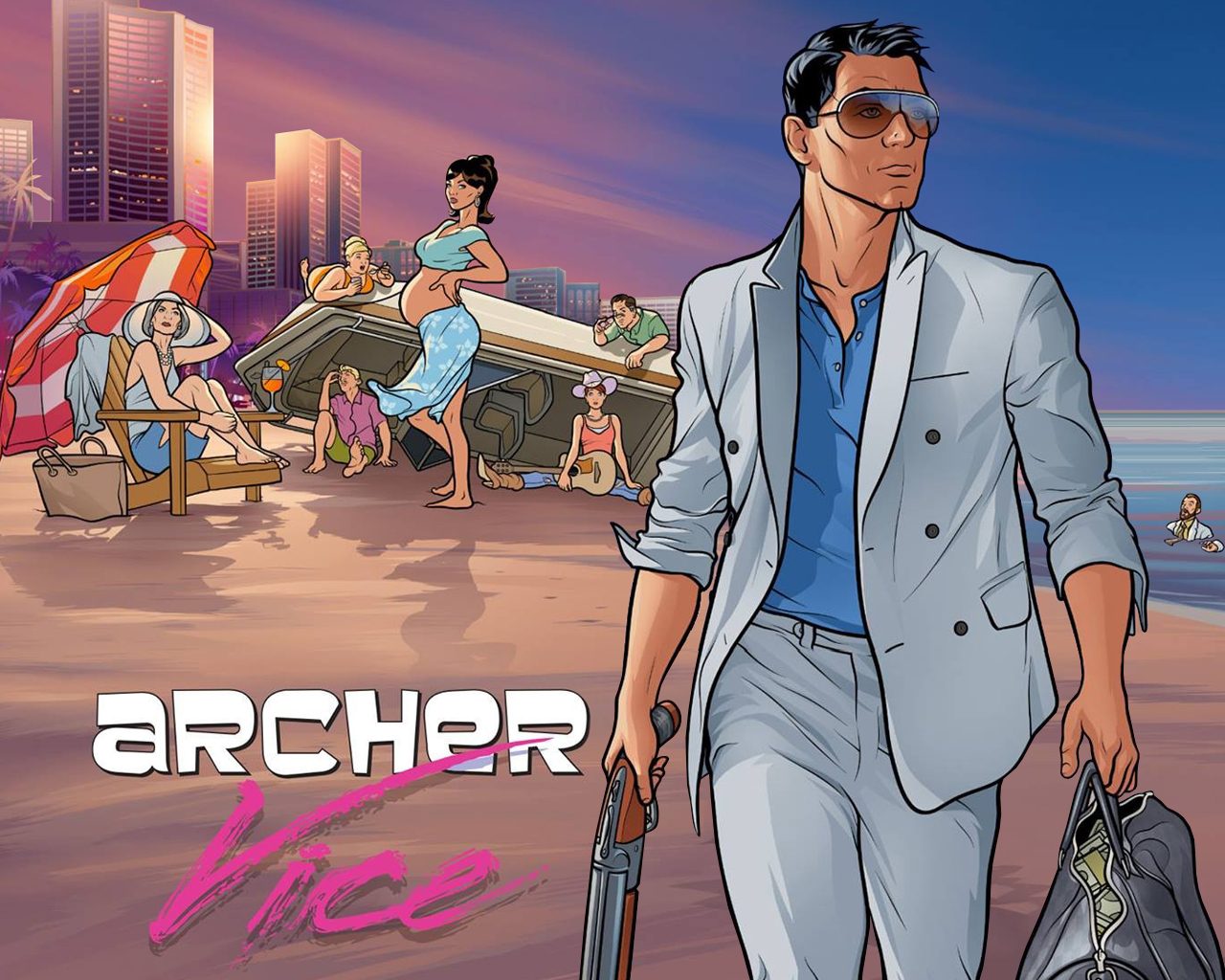
Season Review: Archer - Season 5


Archer's fifth season deserves credit for sheer ambition alone. After a fourth season that saw the show spinning its wheels a bit, the show completely rebooted its premise in Season 5, shutting down ISIS and turning the gang into cocaine dealers. They certainly didn't have to do this. While Season 4 was Archer's weakest season, it was still solid enough that it could've easily coasted on that level of ambition for the remainder of its run and still remain FX's biggest comedy hit and a general fan favorite (if less of a critical one). Just look at Modern Family - what was once heralded as a fresh take on the family comedy format is now a hokey stalwart that still manages to beat most shows on TV in the ratings each week. Archer could've spent in its middle age churning out the same tired dynamics that Season 4 beat into the ground and still managed to succeed, and even thrive in some ways. So the fact that Adam Reed rejected this notion, the fact that he wanted Archer to remain a show people actually gave a shit about, is admirable enough, and is, quite honestly, a feat that I hope more showrunners take in the future. Luckily, we don't have to give Archer Vice a participation trophy, though, because it was a pretty great season of television - even if it wasn't the season many were expecting.

I think Archer Vice's greatest misstep, honestly, was that action-packed montage in its premiere episode. It promised a season that was much more of an exciting drug heist than it wound up being, which I think tempered a lot of peoples' excitement and blinded them to the fact that what the show was doing was pretty sensational, even if it wasn't quite what they expected. Admittedly, even I am slightly disappointed that some of those promises in that montage were never fulfilled (where was that tiger on Archer's desk?!), and it took me a few episodes to adjust my expectations for what Archer was doing this year. But at some point - probably around the time that I realized they were going to lose all of the cocaine - I realized that this season was not at all about the drug trade, and was instead about analyzing the relationships between the characters on this show. Just look at how many episodes this season were basically bottle episodes that trapped all of the characters in the Tunt mansion and forced them to interact with each other. And even the action-packed episodes - like the season-ending arc that had the gang trapped in Mexico - sort of confined everyone to one place and forced them to work out their shit, rather than sending them off on crazy missions like past seasons did. Considering the plan all along was apparently to get the gang back to ISIS, I think this was the best decision. Archer Vice put interesting spins on just about every relationship on the show this year - from Archer and Lana's renewed respect for each other (and their DIVE INTO PARENTHOOD), to Archer and Pam's growing compatibility, to Cheryl's realization of her own weird, country singer ambition, Archer Vice put a lot of things together than I didn't expect the show to. Archer is a show that's primarily about the laughs (and some genuinely great cartoon action), but its treatment of its characters and their relationships as real - no matter how fucked up they are - is what keeps it one of the most interesting comedies on TV, as well as one of the funniest. So for all of Archer Vice's missteps and broken promises, it succeeded in keeping Archer fresh and renewing my interest in a lot of these characters - which was, really, all it needed to do.

Final Grade: B+

Monday, April 21, 2014

Season Review: Rick and Morty Season 1


A few posts ago I mentioned that Rick and Morty is one of my favorite shows on TV right now, but that it's a show that I don't know I would like writing about very much. This isn't because Rick and Morty is one of those shows that suffer the more you think about it (also known as "bad shows") - quite the opposite, actually. It's because Rick and Morty, much like Doctor Who (one of its spiritual ancestors), is a show where I just love getting swept up in the fascinating world it presents to me, rather than analyzing every little aspect of it like it's an episode of Mad Men. But before I get on to that, I figured I should give a shout out to what might be the very boldest comedy on TV right now, if not one of the boldest shows.

The truth is, I don't know if I've ever seen a show that is as comfortable with redefining its very existence as much as Rick and Morty is. It's a show that rewrote its entire setting by killing its main characters in their own dimension and transporting them to a new one in the sixth goddamn episode and then actually addressed it a few episodes later! It's a show that introduced an alternate version of Saturday Night Live where Bobby Moynihan gets into a feud with a piece of toast! It's a show that revealed its characters are simply one of millions of identical beings spread across multiple dimensions! This is insane stuff, and the fact that the show even attempts it makes it one of the best shows on television. TV - and TV comedy in general - is a medium that thrives on the familiar. It's why the most popular shows on television are typically shows where every episode looks sort of the same. We sit down to watch an episode of TV, and we expect to know exactly how everything is gong to go, to the point where we could just kind of sit back and enjoy the ride. Granted, many television shows have challenged this ideal (particularly in the past 20 years or so), but even those shows tend to rely on some sort of formula to lean back on. And hey, so does Rick and Morty, probably, but right now, there's no other half-hour comedy where I can sit down and genuinely not know what world I'm going to end up in. The shows' best counterpart is likely Futurama, but that shows' playing with alternate dimensions is baby steps combined to the levels of mindfuck in Rick and Morty.

The thing is, though, Rick and Morty isn't just a bunch of cool concepts. It hangs those concepts around a genuinely hilarious show, one with great jokes and fully-realized characters and even the occasional grounded plotline. In fact, I'd argue that one of Rick and Morty's strengths is that it can make a plotline as done-to-death as a married couple on the brink of divorce or a teenage daughter feeling unwanted and give them giant, world-shattering stakes, making them feel as huge and life-altering as they do when they happen to you. Rick and Morty uses its sense of experimentation not just to be cool (though it is REALLY fucking cool) but to bring a level of pathos to its characters that not many shows can compete with. The fact that the show can be an actually boundary-pushing sci-fi program and a truly compelling family comedy go a long way as to showing just how much the show successfully juggled this season. There have been few first seasons I can think of that were as fresh-feeling and excitingly unique as Rick and Morty's first season, and I'm sincerely looking forward to just what the hell they're going to come up with in Season 2.

Final Grade: A

Season Review: Community Season 5


Every season of Community recently seems like it has some unfortunate circumstances that it has to overcome to prove itself. The third season had to somehow match the amazing and genre-defining second season (which it mostly managed to do, despite inevitably dropping slightly from that seasons' earth-shattering heights). The fourth season had to prove that, without the careful hand of creator Dan Harmon, the show was still Community (which it wasn't, really). And the fifth season had perhaps the hardest task yet. With Harmon back at the helm, Season 5 had to save the show. After the rightly-maligned fourth season, Community was no longer TV's best, most thoughtful, and most unpredictable sitcom like it was during the original Harmon years. Could Season 5 change that? Could it restore the show to being one of the most exciting things in the world of comedy, like it had been before?

Basically, it did as well as it could. While Harmon's return added a jolt of energy to the aging Community, it was still very much a show in its fifth season. A show in its fifth season can't be as surprising and exciting as a show in its first or second season, simply because by this point, we know the show's game. We know what to expect. This is true especially of sitcoms, which can only go so far to change their own status quo out of fear of messing with the formula that makes the show what it is. Even a show as unique as Community relies on some form of formula to keep the engine running, and this was strangely most true in the shows' concept episodes, which felt a bit more rudimentary than they did in the shows' early days. While concept episodes once allowed the show to experiment with new storytelling methods to gain new insight on its characters, the fifth seasons' concept episodes felt like episodes the show was doing because everyone expects them to. There was some gold within them - "Basic Intergluteal Numismatics" was a messy but fascinating endeavor, and "Geothermal Escapism" was a fitting combination of insanity and emotion to send off one the shows' most integral characters, but there were also episodes like "Advanced Advanced Dungeons & Dragons" (which felt like a reheated version of Season 2's Dungeons & Dragons episode, one of the shows' very best) and "G.I. Jeff" (which managed to be a funny send-up that said some interesting things about Jeff but sort of abandoned them by the end of the episode).

Still, it's hard not to call Season 5 an incredibly comeback when it produced episodes like "Cooperative Polygraphy" and "Bondage and Beta Male Sexuality". These two episodes found the characters at the most grounded they've been since arguably the second season, and it managed to dig into the core sadness and longing that drives Community at its best. Both episodes used tactics that worked in the past - getting all of the characters around the study table for the former (used most memorably in the hysterical and weirdly moving "Cooperative Calligraphy"), and taking the characters out of Greendale to analyze who they really are for the latter (used in my personal favorite episode "Mixology Certification" as well as in the gently heartbreaking "Critical Film Studies"). It was in these episodes that Community showcased best how far it had come from the doldrums of the "gas leak year" - while that season only seemed concerned with the characters on a surface level, this season returned to trying to figure out who these people are beneath the surface. I argued in my last Community piece that this side of the show is what makes the show able to pull off its conceptual side, and that was never more true this season. Had this season been an endless march of "G.I. Jeff"s, things would've felt pretty hollow. But episodes like "Polygraphy" and "Bondage" were able to bring a level of insight that both kept the season afloat and gave the concept episodes a much stronger leg to stand on.

So if this season of Community occasionally felt a little tired, it was only because this is a sitcom in its fifth season, and that's natural. For the most part, this was still a show that used some amazing, deeper-rooted character work to pull off some of the more interesting structural experiments you'll ever find in a television comedy. At this point last season, I was desperately hoping Community would get a fifth season not necessarily because I was looking forward to watching it (since I figured it'd be another Harmon-less year) but because I couldn't stand the thought of one of my favorite shows of all-time ending on a season (and an episode) that mostly made me sad and angry. This year, I'm desperately hoping for a sixth season because I genuinely want more of this show that I love again. (And because, you know, #sixseasonsandamovie and all). That alone speaks for how far Community has come back this year, doesn't it?

Now bring on that sixth season. And the movie.

Final Grade: B+
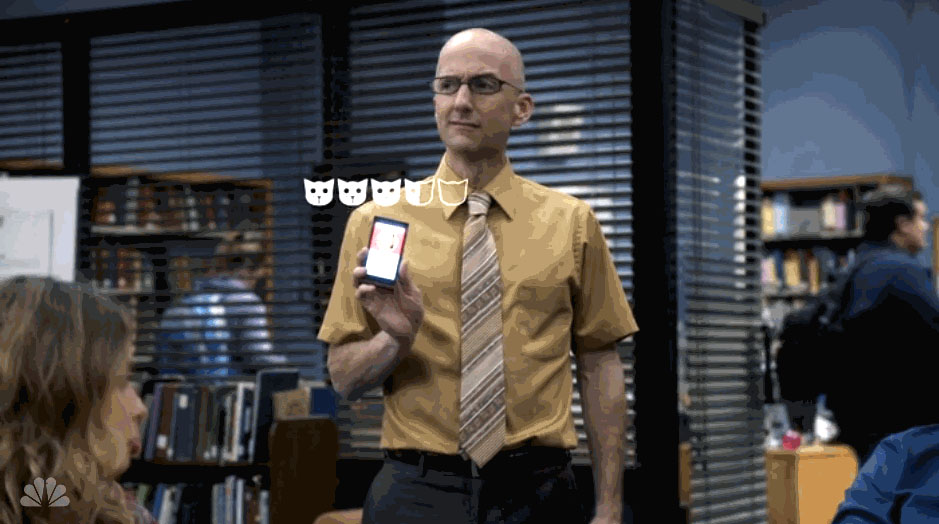
(or, four MeowMeowBeenz)