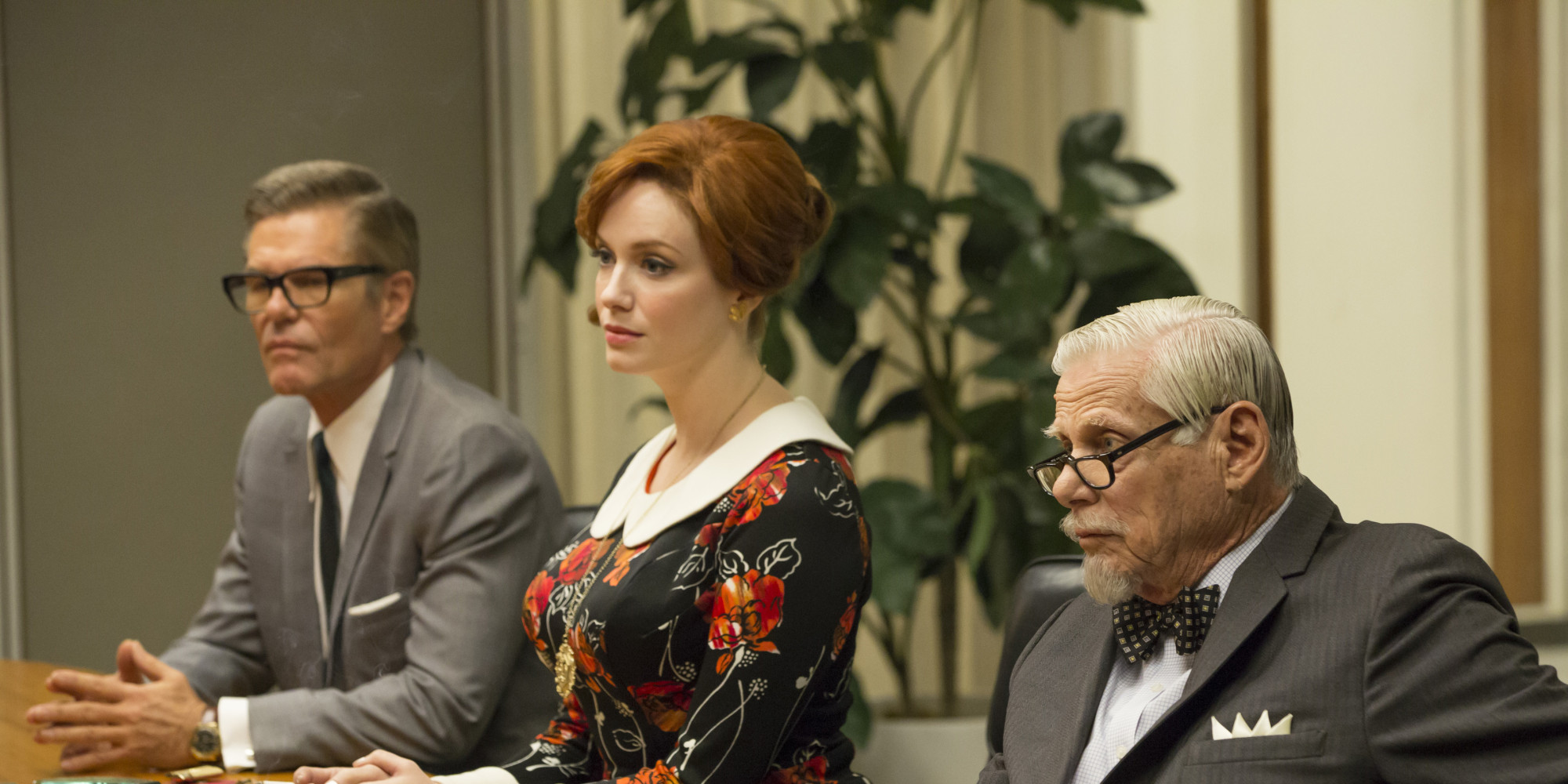
Showing posts with label Mad Men. Show all posts

Thursday, December 18, 2014

The weirdest, most wonderful TV moments of 2014

In our viral, millennial culture (ugh, someone punch me for that please), it's more important than ever to create individual scenes and moments that stick out and stay in our brains. 2014 saw so many oddly creative, completely weird, and totally surreal moments that have stuck with me, in some cases, for months and months, so I thought I'd make a quick list compiling the best, weirdest, most memorable TV moments of 2014 in no particular order.

Orange is the New Black - Morello's Backstory

(From Season 2, Episode 4: "A Whole Other Hole")

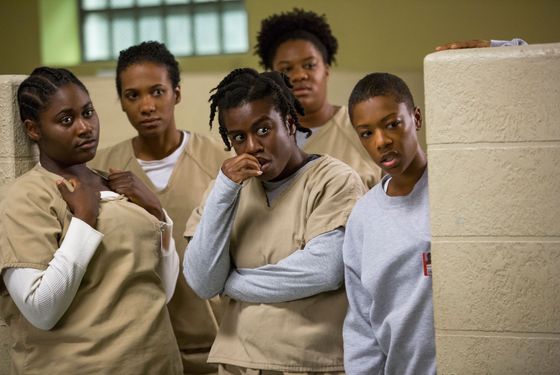
Through out all of the first season, we heard tales of Morello's fiance on the outside, sort of wondering why he never visited but nevertheless generally accepting her tales of a happy future outside of Litchfield. All of that was devastatingly destroyed in a single montage, which revealed that Morello's fiance is an ex that she spent years stalking and is continuing to do so, using the prison van to find his house, put on his real fiance's wedding dress, and live out the fantasy that she's convincing everyone is real. I couldn't find a clip of the actual scene, so just use this YouTube clip of "Almost Paradise", a cheesy love ballad that the show scored the scene with, turning it into a terrifying and heartbreaking cry for help.


Mad Men - Bert Cooper Serenades Don Draper

(From Season 7, Episode 7: "Waterloo") 

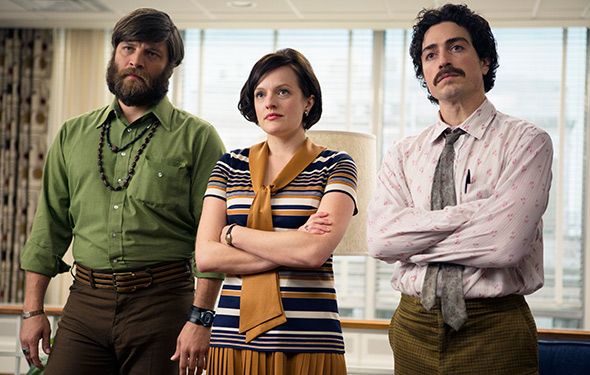
Some fairly major spoilers for Mad Men Season 7 follow, so if you haven't caught up, don't read. If you do read, then it's your own goddamn fault.  Some shows might put a tense cliffhanger as the close to the first half of their final season, but Mad Men, instead, decided to have a recently deceased character come back from the dead and serenade its protagonist about the soul-sucking contract he has just signed. And we wouldn't have it any other way.


Too Many Cooks

Too Many Cooks is an 11-minute short that premiered on Adult Swim's "Infomercial" block at 4 AM, got uploaded to YouTube by a bunch of stoners, and completely captivated the country for a few weeks. I don't need to explain why. I can't do it justice. I just need you to watch it. 


Community - Dean Pelton's Peanut Rap

(From Season 5, Episode 9: "VCR Maintenance and Educational Publishing") 

The Dean has had many different costumes over the years, but the best of them all came this season, when he dressed up as a peanut and offers an apology rap that quickly turns racial and disturbing. This is perhaps Jim Rash's best work ever, including that movie he won an Oscar for.


Rick and Morty - "Saturday Night Live of the Future" 

(From Season 1, Episode 8: "Rixty Minutes")

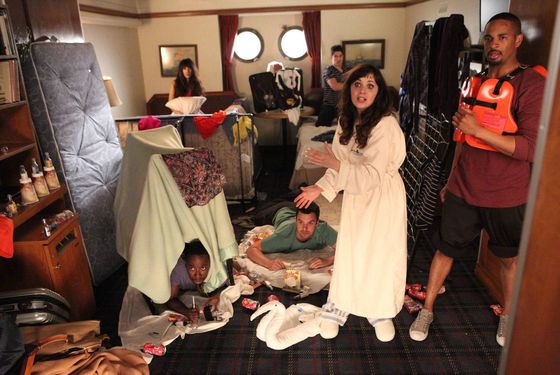
The "Rixty Minutes" episode of Rick and Morty is probably my favorite TV episode of the year, and part of that is due to the completely improvised intergalactic TV show ads. One of the best was what Rick and Morty imagines a futuristic SNL would look like, starring a bunch of inanimate objects and Bobby Moynihan. 


Bob's Burgers - "Work Hard or Die Tryin', Girl"

(From Season 5, Episode 1: "Work Hard or Die Tryin', Girl") 

Bob's Burgers produces some of the best music around, and that all came to a head when the show had Gene produce a musical that puts together Die Hard and Working Girl, creating the beautiful speicman known as..."Work Hard or Die Tryin', Girl."


Broad City - "Eight Fucking Thousand Dollars"

(From Season 1, Episode 9: "Apartment Hunters")

When Broad City opened its ninth episode with an elaborate music video parody, I was confused and thought I had changed the channel or something. Then I realized: nope. This is a music video, that they created, to showcase Abbi's $8,000 check from a dating service that used one of her drawings. It's wonderful, as is the snap back to reality after the fact.


Wednesday, December 17, 2014

Best TV of 2014

With a vast array of television shows to choose from each year, it seems a little bit redundant to declare each year the "best one" for the medium. And yet, every year it's hard not to do that, as the huge amount of content available to us produces so much amazing material that you have to get excited about it. The past few years of television have felt especially vital, too - they've been years of change, both in the television shows we consume with old stalwarts like Mad Men, 30 Rock, Breaking Bad, and Parks and Rec either ended or ending soon, to the way that the consumption of television is rapidly reinventing itself. This list features shows from network television, cable, and streaming services - a variety that would've been unthinkable even five or six years ago. So here I break down the top 20 shows that best captivated my interest this year. I went with 20 because there was so much good stuff on this year that I felt too bad leaving anything out. I know I'm indecisive, okay?! LEAVE ME ALONE.

ONE NOTE: I didn't put Last Week Tonight with John Oliver on this list because I always forget to categorize it as a TV show and not just, like, a way of life. But rest assured I love it. It's the best news-comedy hybrid on television right now, which is not nothing in a world with The Daily Show and the swan song of The Colbert Report. SORRY, JOHN OLIVER, but I love you anyway. Oh, and the same can be said of The Chris Gethard Show, which I also love but forget it's a television show and not just a hangout with some old, weird friends. I LOVE YOU TOO, CHRIS GETHARD. I LOVE EVERYTHING. Actually, I'm hoping to do an individual piece on The Chris Gehtard Show sooner rather than later so I'll give it the love it's due then. Until then, enjoy this list, if you want to!

20. Parks & Recreation


Now in its sixth season, it's only natural that Parks & Rec has lost some of the element of surprise from the time when it was a transcendent and refreshing spin on the old workplace comedy chestnut. But although this past season was probably the show's weakest, it still managed to be a funny, entertaining and consistently delightful half-hour, and considering the amount of affection we've stacked up for these characters over the years, that's enough to keep enjoying our time in Pawnee. Especially impressive was the shows' finale, which changed up its game quite considerably for its upcoming final season and proved that maybe it did have a few more tricks left in its bag after all.

Standout Episodes: "Ann and Chris", "Galentines' Day II", "Moving Up"

19. Black-ish


In a season that has made a strong case for the idea that cable has completely replaced network as the go-to for good comedy on TV, Black-ish has remained an important "except for...", as it's the only new network comedy this season that shows any sort of promise for the future of the medium. But Black-ish didn't earn the distinction of the seasons' best new comedy by default - it's a hilarious and creative family sitcom, one that balances social issues and family hijinks better than any show has managed to do in probably decades. Not only that, but the Johnsons are just a genuinely awesome family, the kind of TV family that you look forward to spending some time with every week. Shows like Black-ish are perhaps the last remaining argument for the worth of the network sitcom. Also, it's just really funny.

Standout Episodes: "Crazy Mom", "The Prank King", "Black Santa/White Christmas"

18. Archer


At the beginning of its fifth season, Archer unexpectedly blew the lid off of its entire premise, ditching the spy agency that had been so kind to it in the past four years and sending its characters on a crazy quest as newfound cocaine dealers. While the season didn't quite live up to the tall order that its premiere set up, it was still a reinvigorated season for the show, with a lot of interesting twists on character dynamics that were beginning to feel a little bit stale. As it heads into its sixth season with a return to the status quo mixed with some new surprises,  Archer feels like it's in solid hands, and it can thank some of the experimental done by Archer Vice for it.

Standout Episodes: "White Elephant", "Baby Shower", "Arrival/Departure"

17. New Girl


In the second half of its third season, New Girl showed some signs of losing its way. The Jess/Nick relationship, while entertaining, was beginning to push the other members of its ensemble out of the picture, and the show seemed to be struggling to balancing it with all of the other changes it integrated in the third season, such as the addition of Coach and new endeavors for Winston. Luckily, the show seemed to realize this and quickly course corrected in its fourth season, which might just be the most consistent season of the show yet, even if it doesn't reach the heights of the all-timer that was Season 2. Still, Season 4 of New Girl has managed to be a reliable dose of well-executed farce week after week, with a sprinkle of the characterization that made the show jump out in its early seasons. It may not be the world beater it once seemed to be, but damn if it isn't still one of the funniest shows on TV.

Standout Episodes: "Basketball", "The Last Wedding", "Background Check"

16. Community


With Dan Harmon back at the helm, 2014 was a comeback year for Community after the deep trenches of the gas leak year. While the show has definitely begun to feel like a late-in-life sitcom at times (see also: my Parks & Rec write-up) it still manages to pump out episodes that rank among the most daring things I've seen a half-hour sitcom attempted, and given how much experimentation the form recieved this year, that's actually a pretty big statement. The 5th season also turned out to be the final one of the show's run on NBC, as it moves to its new home on the internet next year, where it has always seemed destined to be. As long as it continue to pump out ideas as fresh and hilarious as commemorative sperm jars and MeowMeowBeenz, I'll support it wherever it goes.

Standout Episodes: "Cooperative Polygraphy", "Bondage and Beta Male Sexuality", "App Development and Condiments"

15. The Middle


Year after year, everyone forgets about The Middle when it comes time to do year-end lists, despite the fact that it has been one of the most consistently great network sitcoms for at least four seasons now. The show continuously manages to breath new life into the family sitcom format, portraying characters who are unique both for the form and for television in general, and by not pulling any punches when it comes to its honesty about the Hecks' financial situation and almost constant sense of conflict. As its characters age, The Middle is finding more and more ways to dig comic honesty out of the world of small-town America characters its created, and it's only continuing to be an absolute joy to watch.

Standout Episodes: "Major Anxiety", "The Sink Hole", "The Christmas Wall"

14. Brooklyn Nine-Nine


After a strong start last fall, Brooklyn Nine-Nine solidified its place this year as one of the best ensemble shows on all of television, with a cast that completely pulls its weight in every direction and an array of characters that are diverse not just in their ethnicity but in their approaches to the world in general. The second season of the show has done a great job of deepening the roots between these characters and examining their bonds while beginning to experiment a bit with longer-term plotting, even successfully toying around with the idea of romantic arcs (though not going too far in that direction yet, thankfully). Like Black-ish, Brooklyn Nine-Nine is proving the strength of a show with a great group of characters that you look forward to spending 22+ weeks a year with.

Standout Episodes: "The Bet", "The Road Trip", "The Pontiac Bandit Returns"

13. Louie 


After a too-long hiatus, Louie returned this year with its more ambitious season yet, a season that almost completely abandoned the shows' previous structure of short, contained stories and instead focused on developing longer and even feature-length arcs. Still, the shows' sense of hard truth and deep-rooted emotional turmoil continued as Louie explored his relationship with the various women in his life, from his daughters to longtime companion (and new girlfriend?) Pamela to his past relationship with his own mother. While this was arguably Louie's most inconsistent season yet, what it lacked in consistency it made up for in sheer ambition. 

Standout Episodes: "Model", "So Did the Fat Lady", "Into the Woods" 


12. Transparent


The first great show to be produced by Amazon Prime, Transparent - not unlike fellow streaming exclusive Orange is the New Black  - uses its niche delivery method to tell a story that would struggle to get attention from a major television network. In this case, it's the story of Maura Pfefferman, a transgender woman who has recently settled upon officially making the transition late in her life. Transparent's groundbreaking story of Maura alone was enough to make it one of the most captivating shows of the year, but the way it used Maura's revelation to deconstruct the rest of the Pfefferman clan's assumed gender and sexuality roles only added to the fact that this was one of the most intriguing new shows of the year.

Standout Episodes: "The Wilderness", "Symbolic Exempar", "Best New Girl"

11. Nathan for You


Nathan for You was one of the strangest and most delightful pieces of pop culture I consumed this year, constantly keeping me on the edge of my feet more than most drama series are capable of doing. The shows' unique mix of cringe comedy, mockumentary, and reality show spoof continuously come together to produce some of the most hilarious television I've ever seen. In Season 2, the show began to hit on points of genuine pathos, as it gradually turned into the story of desperate inclusion for its lonely host. There's absolutely nothing on television like Nathan for You, which is what makes it something you absolutely need to watch.

Standout Episodes: "Souvenir Shop/E.L.A.I.F.F", "Dumb Starbucks", "Daddy's Watching/Party Planner"

10. Doctor Who


It's hard for me to remain unbiased with a show like Doctor Who, a show that appeals so directly to each and every one of my personal preferences, but I don't think it's my bias speaking when I say that this season was one of the very best seasons the show has done to date. Peter Capaldi as the 12th Doctor has brought a new energy to the character, one that gets down to the anger and ache that always exists under the surface but is finally being brought out to the light. And also adding to a great season was Jenna Coleman, whose character Clara rebounded from some spotty characterization last season to become a really great antidote to the smarmy darkness that Capaldi brought to the table. The show used this perfect pairing to create a season that constantly put the very fabric of the show into question and reinvigorated the series to heights I wasn't even sure if it was still possible to reach. Capaldi is thankfully signed on for another season, and hopefully he can keep pushing the show into uncharted and exciting territory. 

Standout Episodes: "Listen", "Kill the Moon", "Flatline"

9. Review


2014 was full of great, alternative comedies that ripped apart the sitcom structure and created something new and meaningful out of it. Out of all of the shows, the one that went to the most delightfully weird places was Review, a show about star reviewer Forrest MacNeil and his quest to review everything that his shows' viewers throw at him. Review would be great even if it was just the satire of critics that it appeared to be on the surface, but it soon became a dark, morbid tale of a man destroying his entire life for the sake of a silly television show, become one of the funniest shows of the year, as well as one of the saddest, darkest, and most disturbing. If 2014 is remembered as the year alternative comedy came to dominate the cable airwaves, Review will be a proud, strange and beautiful artifact of that movement.

Standout Episodes: "Pancake, Divorce, Pancakes", "Best Friend/Space, "Road Rage/Orgy"

8. Veep

After two seasons of portraying Selena Meyer as a comically inept narcissist, Veep took it to the next level this year by portraying her as something truly disturbing: a possible presidential candidate. This gave the show an added levity to its already near-constantly firing machine of beautifully crafted insults and nihilistic political humor, as all of the massive and terrifying fuck-ups Selena and her team encountered now actually mattered. It also allowed the show to cover some heated topics like abortion and equality with its trademark dark humor that doesn't even try to fix anything but instead points out just how massively screwed up it all is. With a surprise twist at the end of the season, the next season of Veep proves to be even more of a depressing, hilarious and painful journey to political turmoil for Selena Meyer. 

Standout Episodes: "The Choice", "Alicia", "Debate"

7. The Americans

In Season 1, The Americans was a gripping spy thriller, an unprecented role reversal that took a deeper look into what we always perceived were the "bad guys" in the Cold War. In Season 2, the show took a leap and became not just a spy thriller (though it was still very good at being that) but an analysis of what its characters value, how much they value it, and a test of how far they were willing to go to preserve it. Kicking off with a gruesome murder in the season premiere, constant fear crept around the surface of The Americans this year as Phillip and Elizabeth began to wonder whether their career was putting their childrens' wellbeing at stake. It all cultivated in a huge, unprecedented twist in its season finale that will make the shows' third season answer some very, very tough questions.

Standout Episodes: "Comrades", "Behind the Red Door", "Martial Eagle"

6. Orange is the New Black


It was going to be nearly impossible for Orange is the New Black to top its first season, a total surprise that burst onto the scene and practically made us rethink the way we all watched television. And yet...Season 2 somehow managed to, or at the very least, managed to match it. The second season expanded upon the shows' already giant universe, filling in the backstories for beloved characters like Taystee and Suzanne while simultaneously giving shades to characters that fell under the radar in the first season but came into prominent fruition in Season 2, such as cancer patient Rosa - nearly an afterthought in Season 1 that wound up being one of the key heroes this year. Between the addition of Vee and the divide she placed in the prison to the continuing saga of Piper and Alex to the isolation of Red from her prison family to the shocking dismantling of our perceptions of Morello to the strange friendship of Healy and Pennssatucky, Season 2 continued to do its job of making each and every inmate at Litchfield feel like a fully-rounded person that truly matters, and that mindset is what separates Orange from nearly anything else on TV.

Standout Episodes: "A Whole Other Hole", "You Also Have a Pizza", "We Have Manners, We're Polite"

5. Rick and Morty

In a year of amazing comedy, Rick and Morty was a true highlight, a show bursting at the seams with creativity. Centered around the Back to the Future-esque adventures of grandfather Rick and his grandson Morty as they travel through time, space, and reality, Rick and Morty blended comedy and hard science fiction more successfully than any show this side of Futurama. Week after week, Rick and Morty took us to heights that seemed more ridiculous, more exciting and more amazing than anything we'd seen before, all while grounding itself in some genuinely moving family drama. That kind of balance is so incredibly hard to pull off, but Rick and Morty did it with aplomb, making me extremely eager to see what the show can come up with next.

Standout Episodes: "Lawnmower Dog", "Rixty Minutes", "Close Rick-counters of the Rick Kind"

4. Mad Men


Thanks to AMC scheduling tomfoolery, Mad Men only aired seven episodes in 2014, but those seven episodes were something of a revelation. After the turmoil of last years' finale, Season 7 dealt with an exploded status quo - one that spelled out a dark end for our "hero" Don Draper. And yet, these seven episodes turned out to be more than just Don's death knell. They were the start of what I'm sure will be a doozy of an ending, a collection of episodes that brought together seven seasons worth of relationships and put a magnifying glass to them, showing which relationships were true and once were sprinkled with the artificiality that the characters of Mad Men treat as a second language at this point. The final absurdist scene, featuring a dead Bert Cooper singing to Don about how "the best things in life are free", brought everything this season was to a close: strange, surprising, a little disturbing... and yet somehow making perfect sense.

Standout Episodes: "A Days' Work", "The Strategy", "Waterloo"


3. You're the Worst


Romantic comedy is an old chestnut at this point, so that only makes it even more surprising just how excellent You're the Worst turned out to be. By putting its leads together in the pilot and slowly deconstructing all of the expected romcom tropes, the show was able to focus in on its characters and create two people that we didn't just want to see get together, but that we just wanted to see, because they were both relatable, funny, and well-drawn characters. You're the Worst also benefited from being more than just Jimmy and Gretchen's story - Lindsay and Edgar served as supporting characters that gawk at the idea of just being supporting characters, demanding that Jimmy and Gretchen treat them on their own accord. Additionally, characters like Becca & Todd, Allan, and a special bookstore cat added to the mix to prove that You're the Worst wasn't just about Jimmy and Gretchen's relationship, it was also about the comical, screwed up world that they both inhabit, which only added to the richness of their compelling hook-up. Renewed for a second season, I'm really excited to see where You're the Worst will take that world when it returns next year.

Standout Episodes: "Sunday Funday", "Finish Your Milk", "Fists and Feet and Stuff"

2. Bob's Burgers


Another year, another string of amazing episodes with the Belchers, my favorite TV family with some of my absolute favorite TV characters. Bob's Burgers continued to deliver total acceptance in form of warm, weird, occasionally gross but always hysterical comedy, and this season saw the show produce some of its strongest and most creative ideas yet, from the My Little Pony spoof The Equestranauts that had some interesting things to say about cartoon fanbases, to a Working Girl/Die Hard musical entitled Work Hard or Die Trying, Girl, to a new and improved(?) use for baked beans. As you can see, I love a lot of television shows, so it means something when I say there's no show whose world I look forward to joining more than the loving and twisted world of Bob's Burgers.

Standout Episodes: "Mazel-tina", "The Equestranauts", "Dawn of the Peck"

1. Broad City

I've mentioned several times what an amazing year this was for comedy, and I don't think there's a show that represents that better than Broad City, which was the show I laughed at the most in 2014 and also introduced me and the rest of the world to the comic stylings of Abbi Jacobson and Ilana Glazer, whose humor offers a worldview that differs from anyone else's making television - both in terms of how upfront and honest it is about the struggles of young women in a big city (what other show would coin the phrase 'pussy weed'?) and in terms of just how beautifully, amazingly strange it is at every turn. The humor of Broad City is unlike any other - it's surreal yet grounded in some deep-rooted truth, it's smart and yet unafraid to appeal to its dirtiest impulses, and most importantly, it's just so fucking funny. This year in TV will be remembered as the year so many unique comic voices received a platform to share their stories, and the year that television proved there wasn't one specific way to tell a comedy story. And there's no better show that exemplified all of that than the fearless breath of fresh air that was Broad City.

Standout Episodes: "Working Girls", "Destination Wedding", "The Last Supper".

THERE'S MY LIST. Have a wonderful holiday season and watch all of these shows if you haven't. DO IT NOW.

Monday, May 26, 2014

Mad Men - "Waterloo"


Oh, Bert Cooper. What a man.

Due to AMC's amazingly irritating scheduling choices, I've sort of forgotten that this is the final season of Mad Men. Sure, there's been some sense of finality, but it didn't come into full force into this weeks' mid-season finale, which made it clear that we're finally coming to the end of our journey through the lives of the workers of Sterling Cooper (Draper/Pryce/& Partners). Mad Men is a show that has always done such a great job of acknowledging and interacting with its past, so it's not surprise that so much of "Waterloo" (and, really, this season as a whole) has felt like both a celebration of what came before it and a declaration that things are about to change. "I thought things were finally getting back to normal", Peggy says about halfway through this episode. And, really, they were. Don's back at the office, seemingly working his way back to some sort of respect. His relationship with Peggy has mended, and his relationship with Megan was...still there. and business seems to be returning to its usual course of action. And then, Bert Cooper dies and then comes back to life in a full musical number. That's Mad Men for you.

Let's back up a little, of course. Bert Cooper's death is perhaps the biggest indicator that the story of these characters is about to reach its endgame. Long the bedrock of the origins of the company and the old game of advertising, Cooper represented someone each of the agency members could aspire to be. He was basically a statue at this point, sure - never technically contributing much to the company but always there to be either a model or a warning sign for the future, depending on how you look at it. Cooper and Don's relationship is one of particular interest - he was extremely high on Don in the early seasons, even choosing to overlook the sketchy details of his past back in Season 1's "Nixon vs. Kennedy". But as the years went on, Cooper seemed to grow increasingly frustrated with him, irritated at the way he did everything in his power to subvert and overthrow the rules of the game. So what does it mean that, following his death, Don hallucinates Cooper putting on an elaborate song and dance to "The Best Things in Life Are Free?". Perhaps part of it is Matt Weiner's middle finger to the entire concept of  a "mid-season finale", but more than anything, it seems to be a warning sign. Cooper was a symbol of what Don aspired to be - a successful man at the top of an advertising agency, leaving behind a legacy of fortune and goodwill. And yet, here he is, after death, serenading Don about how the best things in life are free and not to sign your life away - right after Don signed a five-year contract with an agency that a few days earlier was trying to get him fired. Don has been heading down a path of loneliness. But maybe it's not too late to turn that path around. Maybe it's not too late for any of these people to turn that path down. Sure, this merger is going to give them a lot of money. Sure, Peggy's brilliant pitch to BurgerChef (which, by the way, I don't think I've ever been as proud of a character as I was for Peggy in that moment) will likely earn her a lot of credibility and respect that she's been vying for since the day she started at Sterling Cooper. But at their core, so many of these people are still undeniably disappointed. Joan is understandably thrilled at the prospect of giving her son a great life despite the lack of a father figure in his life - and yet, she can't help but feel disappointed at the way she's failing to live up to the expectations she set for herself. Peggy can't help but see the ghost of what could've been in her neighbor Julio, a boy who looks up to her as the mother she could've been nine years ago. (Thank God she didn't, though, because then we wouldn't have gotten that BurgerChef moment). Don may still have his charm and his skills, but he's now failed at two marriages and his relationship with his kids is certainly not what he'd like it to be (even as Sally seems to be increasingly looking up to him again, rejecting the hot jocks' cynicism and going for his idealistic brother with a telescope). These people are a long way from happiness, despite all of the money and good fortune that might be coming their way. But they can still achieve happiness. They just have to listen to Bert Cooper. The moon belongs to everyone, and the best things in life are free.

Sunday, May 18, 2014

Mad Men - "The Strategy"


One of the things that is surprising me about this final season of Mad Men is how optimistic it's turning out to be. Sure, there's still plenty of deep, existential sadness lurking at the core, but after the endless string of misery that was Season 6 and the pitch black final season of Breaking Bad - not to mention the foreboding "Time Zones" that kicked off this season - I had assumed we would be in for a season that followed all of the characters into their darkest hours. Instead, we've gotten a season that is certainly pretty dark on the whole but has powerful moments of hope scattered through-out the rubble. In "A Days' Work", we saw Don reconciling with Sally, something that seemed unheard of at the end of last season. And now we have something that seemed less likely - Don and Peggy mending their long troubled relationship.

Don and Peggy are interesting because, while they're probably the most important and arguably the most beloved relationship on the entire show, the amount of times we actually get Don and Peggy material is kind of slim. The two have a relationship that's as competitive as it is loving, filled with equal parts respect and bitterness. Sometimes, it's hard to imagine either Don or Peggy being what they are without the other, but then other times, it becomes frustrating just how much they hold each other back. (In particular, the way Don has continiously boxed Peggy into places to better fit his needs has gotten maddening). And yet, underneath all of the shit they do to each other, there's something so honest about them at their core that's unmatched by pretty much every other relationship on the show. It's impossible to mention Don and Peggy without talking about Season 4's "The Suitcase" (easily my favorite Mad Men episode and one of my favorite television episodes of all-time). That episode saw three seasons worth of walls between the characters crash down instantly, which is significant for a show whose characters are constantly shielding themselves from the outside world. They forgot all of the bullshit and just let it all out, getting down to the core of not only who they are, but who they're capable of being, if only they were allowed to. That episode looked like it a game changer, and in some ways it was, but increasingly it began to look like an example of who these people could be rather than who they were. Both Don and Peggy receded back into their protective walls after that episode, but the idea of it has lingered over both of them ever since. And now, three seasons later, Don and Peggy finally seem to be learning their lessons. Once again, we have the two characters beginning a day at odds with each other and ending it in a place where they're more open then they've been with anyone in quite some time. "My Way" blares over the two's (completely fucking platonic, thank you) slow dance, and the meaning is both literal - Don's letting Peggy do the presentation her way - and a bit more abstract. In that moment, both Don and Peggy let go of their guards, let go of what people expect of them, let go of what people think they should be and they just are. That results in both the likely winning idea for BurgerBoss and a seemingly deeper connection between Don and Peggy.

I keep coming back to the use of "My Way", because this episode is full of characters who have yet to follow the lyrics of that song, instead choosing to follow what others think their way is supposed to be. We have Bob Benson, who appears for the first time this season with a motherload of information. SC&P is losing Chevy, but he's going to Buick's advertising brand, meaning that he's expected to become what a "real man" was expected to be in 1969 - something it's quite clear he's not. He proposes to Joan completely out of nowhere, insinuating that both of them are in a place where society won't allow them to be what they want to be. If this was 10 years earlier, it's not hard to see someone like Joan accepting an offer like this. Sure, Bob and Joan would be living lies, but by doing so they would be conforming to a standard that's expected of them, which would undoubtedly lead them down a much easier path. But this isn't the '50s anymore. It's 1969, and suddenly not everyone wants the same thing anymore, especially if it means compromising who they really are. That's as outdated as the concept of the domestic family being brought up in the BurgerBoss ads. The answer is no, because Joan ultimately would rather live the truth and suffer than carry out a lie. That's very different from the answer Joan gave to a similar proposal by Greg eight years earlier.

And then there's Pete Campbell. All season, we've seen a Pete very different from the Pete we've grown to love. Yeah, he had the occasional bitch fit, but this was a Pete that was happy, assured and confident about where he was going. And yet, as soon as he lands in New York, it's like he entered a vortex and moprhed back down into a moaning, tantrum-prone man-child. It's more complicated than that, though - Pete has been living his own kind of lie in California, where he can pretend that he's not a person who completely screwed up the perfectly good life he had going for him. That all changes when he visits Tammy and finds she doesn't even know who he is, and his (not yet) ex wife gives so little of a shit about him that she's not even there for his return. Pete has been poised as the second coming of Don Draper over the past few seasons, right down to his Betty clone in California. He was a guy who was turning over a new identity, who rejected the suburban family life he was being forced into. But Pete Campbell isn't Don Draper. He returns home, finds he's been replaced, and isn't sure what to do with himself. Suddenly, the lie he's been living becomes apparent for the lie that it is. Increasingly, this final season of Mad Men seems to be posing the final question of whether these characters are willing to face the reality of who they really are. And though we won't see that final result for another year (thanks, AMC!), I'm getting more and more interested to see the answer.

Monday, May 12, 2014

Mad Men - "The Runaways"


What. The. Fuck.

One of the things I like the most about Mad Men is the way it occasionally breaks out of its swanky shell and just goes totally fucking nuts. This was most evident in last seasons' The Crash, a completely out of character episode that put its characters on a speed trip and watched the insanity unfold. There were also sprinkles of it throughout the show previously, such as in Don's many Dick Whitman flashbacks and Roger's life-changing LSD trip in Far Away Places. The Runaways, as a whole, was a bit more typical than those moments, but it featured several moments that completely threw me. Yes, you know which ones I'm talking about it. You know which one I am specifically talking about. So, sigh. Let's get to it first.

Ginsburg cuts off his nipple.

Seriously. I'm still processing that this actually happened. Because, I'm sorry, but what the fuck? I get that the show has been hinting that Ginsburg is mentally ill all along, from his strange Martians speech to his suggestively anti-social behavior to his blow-up at Cutler last season. And yet, while I recognized all of these pieces happening, I wondered if the show was ever going to link them together. Given how Ginsburg has been mostly background fodder this season, I sort of forgot about it, focusing instead on Don and Peggy and Megan and Roger and all of the more prominent characters of the season. And then, they just have Ginsburg show up and hand his nipple to Peggy. It's strange. It's surprising. Mad Men knows how we were going to respond to it. It seems like Ginsburg is most likely schizophrenic, a crippling mental disease that can be treated today but likely would've more or less spelled a persons' end back in 1969. Given how Ginsburg was built up as sort of a Draper replacement back when he was introduced in Season 5, it's fascinating and heartbreaking to see his story turning out this way. I don't suspect we've seen the last of him (I certainly hope not), but it's hard to imagine things looking up for him from here on out. It's hard not to be reminded of poor old Sal. Homosexuality and mental illness both had the capability to completely isolate people back in the '60s, and just as Sal's struggle with his sexual identity completely ended his life as he knew it, Ginsburg's mental struggles seem certain to put a pin into his once promising career. The shot of Peggy watching the man she hired, the man she once saw so much potential in, being wheeled out of the agency tied to a gurney was absolutely mortifying.

Nothing else in the episode matched the horror of Ginsburg's story, but there was also some notably odd behavior coming from Megan's side of the fence. We saw Anna Draper's niece Stephanie for the first time since her appearance in the Season 4 finale, seven months pregnant and in need of a home, or food, or anything. Don pawns her off to Megan, who is surprisingly cordial with him after their fallout a few episodes back. As Megan welcomes Stephanie into her hippie dream home, we find out why - Megan clearly still has strong feelings for Don despite the ruins their marriage is currently in, and she realizes that Stephanie is the only person left in this world who knows Dick Whitman and not Don Draper. That's precisely why Megan pawns her off with a $1000 check back to Oakland - I don't think Megan suspects that Stephanie and Don will ever actually do anything together, but Stephanie knows Don in a way Megan never can. And even though Megan's completely fed up with dealing with Don's knee-deep shit, there's still a a large part of her that wants this to work out somehow. Getting rid of Stephanie means that she can have a weekend with Don to herself, a weekend where she can show him that she has her own life outside of him and that she doesn't need him but that she still wants him. This is a contender for Jessica Pare's best episode yet, and the way she plays Megan's confused desperation is so brilliant that it makes the strange threeway scene between Don, Megan and her friend seem like a natural move, one that Megan has to do because she just doesn't even know what else to do. She doesn't know what Don wants. Don doesn't know what she wants. At this point, she will literally try anything, including allowing Don to be intimate with other women (while simultaneously being intimate with her). She thinks this will make her understand Don more, but then Stephanie calls the next morning and she realizes that as much as she knows Don, she'll never know Dick Whitman.

What threw me about this episode was that I wasn't sure how it all came together. The Runaways is a little shaggy in that regard - Ginsburg's descent into madness is traumatizing, but how does it relate to anything else that's happened this season? Megan's attempts to grasp Don back one last time are fascinating, but what purpose do they serve in the shows' larger narrative? Perhaps the answer can be found in the Betty storyline. Tonight's Betty storyline is one of the stronger ones she's had in a while, and I think this season is shaping up to be Betty's best season as Betty Francis yet. It's hard to feel for Betty much these days, but I truly did when Henry flipped out on her for daring to speak her opinion in front of their neighbors. Only Mad Men could make a character supporting the Vietnam War into the most sympathetic character of a storyline, but watching Betty still be marginalized by her husband even after she put some serious work into trying to better herself was really pretty rough. She may be a horrible mother who gives Bobby stomachaches all of the time, but doesn't she still deserve a voice? And maybe that's what this episode is shaping up to be - this season, even. We have so many characters who barely have a voice in anything that goes on in their lives, and we're getting to a point where they're finally ready to speak up even if their husband is telling them to shut up. Betty's going to run for office! (Except probably not. Hopefully not. That would terrible). Don is going to show he's still powerful by jumping over Lou and Cutler! And yet, sometimes that voice leads us to the wrong place - like poor Ginsburg's mental breakdown. But either way, we're reaching a point where that voice can't be quieted for much longer. And the results of that should prove to be interesting.

Monday, May 5, 2014

Mad Men - "The Monolith"


Sometimes, Mad Men is a brilliantly subtle show, including little details that its viewers may not realize until they rewatch an episode several times. For example, I didn't realize until this episode that the partners were sending Don a message by putting him in Lane's old office. (Though that may be because I'm dumb). Other times, Mad Men installs a giant computer in the creative lounge to send a painfully obvious message about how the future is rapidly approaching and it's going to take down anyone who stands in its way. I don't mind too much when Mad Men is overly obvert with its symbolism, though - after all, most shows barely even bother with the levels of symbolism that the show uses on a regular basis. And besides, it wasn't Mad Men who installed that message in the shape of a giant computer, it was Sterling Cooper & Partners. And as Don himself said it, it's not subtle...it's quite literal.

The Monolith is probably the weakest episode of this season thus far, but that only means it's slightly below the levels of the beautifully crafted gut punch that was the first three episodes. It's a little overly obvious, and it has that feel that Mad Men sometimes has when its trying to advance the plot, where it's kind of setting everything into motion when you know it would rather be lingering behind and analyzing everyone a bit more. Still, there was no shortage of excellent moments and things to consider. Let's start with Freddy Rumson, who is gradually becoming one of the shows' more fascinating figures. Freddy Rumson was deemed irrelevant all the way back in the second season, when his pathetic drinking finally cost him his position at Sterling Cooper. And yet, he's perched himself on the margins of the show since then, re-appearing every so often to give Peggy some support and to show as something of a warning sign for Don. He's been a surprisingly major player so far this season, and his pep talk to Don is both a little pathetic and kind of completely awesome. Sure, it's sad that Don has stooped to the levels that he has to be carried home by the guy who pissed himself in his office, but it's intriguing just how genuinely Freddy has managed to bounce back from his low points. Don doesn't want to become Freddy Rumson - and yet, Freddy himself offers the hope that even if he does (and Jesus, he's close), it might not be the end of the line. 

Let's talk about Don. For a while, I was getting a little annoyed that Don was already dropping the ball, because it seemed a little too predictable. But just as "A Days' Work" surprised me by turning the tables and suggesting that all hope might not be lost for Don, "The Monolith" was interesting in how it ended with Don actually heeding the rules and reporting to Peggy, no matter how humiliating it might be for him. Once again, I'm left genuinely wondering where Don goes from here. Hell, I think Don is genuinely wondering where he goes from here. There is a small sanction of viewers that seem to be annoyed at the show for more or less castrating Don's talents this season, and while I find that viewpoint somewhat preposterous, it brings up a genuine point - why is Don dealing with all of this? He, technically, could probably get a better offer somewhere else. Is it all because of his pride? Why is he staying in a position where he has to work under his former secretary? (And look, I get how embarrassing and hard it must have been for both Don and Peggy, but I couldn't help but love the idea of him working under her a little bit). Part of me wants to believe that it's because Don needs to prove to himself that he can just do something right. All of Don's life has been running from his past, running from the aspects of himself that he's not proud of, running away from anything that he perceives as "bringing him down". Maybe it's time to stop running. Maybe it's time to just stay put and do your goddamn job for once. Of course, this is Don Draper. This is Mad Men. It's not going to be that simple. But it should be a lot of fun watching him wish it was!

I'm realizing that this was an episode pretty light on most characters, as the only other major subplot was, of course, Roger and Mona's attempt to lure their daughter of the hippie paradise she's shacking up in. All of this was pretty fantastic, and I particularly liked the tine-in to Don and the computer workers' conversation about the stars tying into Roger and Margaret looking up at the stars. I have to wonder what it was that tipped Roger over from "kind of accepting of his daughters' lifestyle" to "picking her up and dragging her away". The simple answer is that he didn't like seeing his daughter go off to plow some electricity-hating hippie. But I'd like to think it's because Roger is gradually seeing the psychological damage that his lifestyle of ambivalence has had on his daughter. (With a little help from her mothers' habit of bringing gin into the bathroom, I assume). Sure, Roger can lecture Margaret on the damage she's doing on her son by abandoning him, and he'd be right. But she's not wrong when she points out that anyone could've had the very same conversation with him. If Sally is Don's possible escape route into the future, then Margaret is Roger's painful tie to the past. This season of Mad Men is increasingly looking like a season in which the characters are forced to reflect back on who they've been and how that's influencing both who they're going to be and who the people around them are going to be. Nevermind what's going to become Don, Roger, Betty...just what the hell is going to happen to their children? 

Monday, April 28, 2014

Mad Men - "Field Trip"


After the slight glimmer of hope that last weeks' fantastic "A Days' Work" provided us, things are pretty damn grim again on "Field Trip", an episode that doubles down on the two major portions of Don Draper's life - his wife and his job. Both have been hanging by a thread, to say the least, and "Field Trip" brings them seemingly closer to some kind of definitive point. Whether that point is back to where they were before or to an official end...well, we're not quite sure. Both? Neither? Who knows! But whatever it is, it's clear that there's precious few people who don't have Don on their personal shit lists at this point.

One of those people is Roger Sterling, who more or less invites Don back to the agency, half because he's probably pretty drunk when he does so and half because there's a part of him that's willing to forgive Don and believe he deserves some kind of second chance. Roger and Don have had kind of an up-and-down relationship over the course of the series - Roger is Don's kind-of mentor, but he doesn't know nearly as much about Don as he thinks he does, and that fact has always strained their relationship to a point. And yet, it's always been clear that Roger knows Don's potential and how valuable he is to the agency. When Roger blurts out that Don's a "genius' in the meeting that the partners hold to determine Don's fate, it feels like their built up years of rocky friendship and tension-filled admiration finally coming to a crescendo. Roger knows Don is a handful. He also knows that Don is brilliant, and he knows that his skills could be of great use to an agency that is quickly becoming a Chuck Lorre sitcom version of an advertising agency. (Okay, Roger doesn't know who the fuck Chuck Lorre is because Chuck Lorre is not even close to being a thing at this point as he is but a young teenager, probably making lewd comments about his high schools' cheerleading squad to himself, but you get it, okay?).

But is the Chuck Lorre of advertising agencies such a bad thing? The partners are well aware of Don's creative abilities, but as much as we all like to say how innovative and boundary-pushing we all want our work to be, sometimes you don't want to be pushed to the edge of human potential every single goddamn day, especially when doing so requires you to work with a total trainwreck of a man who is not even sure of who he is and now is apparently going to start bursting into crying fits in front of clients about his dumb childhood or whatever. The partners are done. They know Lou Avery isn't going to win them too many Clios, but maybe they'll take a lack of Clios in exchange for a workplace where they generally know what to expect every day and don't have to worry if their creative director is going to have a mental breakdown or not. I've seen a lot of people feel that the workers of Sterling Cooper & Partners were overly harsh on Don, considering he's far better of an adman than Lou Fucking Avery and they should basically be begging him to come back. It's not hard to see that perspective, but can you imagine how hard it must be to put up with Don Draper every single day?

Plus, think of everything Don did to those people over the course of last season. He fired Jaguar despite knowing what Joan had to do to herself to land Jaguar - and he didn't even bother to consult with her, suggesting that all of that sadness and empathy he showed her when she was forced to prostitute herself for a client was a load of hokey shit. He continues to trap Peggy in situations beyond her control - even after she chose to leave him behind and pursue her own opportunists, his force still dragged her right back into his orbit. Then, he had the audacity to meddle in her personal life, sabotaging her relationship with Ted and, consequently, sabotaging her work life. Then, just as SC&P was on the cusp of landing a Hershey account - Hershey! - he completely fucked it up, having a near-breakdown in the middle of his pitch, not even able to finish it. We think we're supposed to root for Don because, well, he's the protagonist and that's how we're trained to interpret stories. But protagonists are people, too - they make mistakes. They do shitty things. Sometimes they do really shitty things. This is all your basic moody anti-hero stuff, but Mad Men has always been an interesting spin on the formula because Don Draper isn't committing the dark, grizzly acts of most anti-hero protagonists. It's not completely out of line to see Don's point of view, really. He's a troubled man who genuinely, at this point, seems to be trying to make the best of things. But the people around Don are people, as well, and they can't be expected to cheer him on just because he's the protagonist and he's trying to make things right. They're fed up. They're pissed. They're done. And it's not hard to see why.

This is true of no one more than Megan, though, and the tragic unraveling of Don and Megan's once-promising marriage has been one of the more devastating aspects of what's been a season with an unlimited stream of despair running through its veins. The early days of Don and Megan's marriage were meant to show a sort of promise, a contrast to the tension-ripe monotone of the Don and Betty marriage. They were always a little mismatched, but that contrast made Don seem alive in a way they never had before. While Don and Betty mostly just seemed to be trying to put up with each other, Don and Megan truly loved each other, even if their love appeared toxic at times. So it's jarring when we fast forward to Season 7 and see the two stuck on opposite coasts and barely even missing each other. If Season 5 Megan had found out that Don lost his job and still chose not to join her in LA, she might have punched him in the face. At least, she would've screamed. But current Megan is barely even surprised. She's hurt, sure. But she's not surprised. In fact, part of her seems like she kind of knew, deep down, all along. "This is how it ends", she says coldly before kicking him out. What is particularly disturbing is how much of this can be compared to the end of the previous Draper marriage. Megan finding out that Don is only visiting Megan because her agent informed him of her fragile mental state is remarkably similar to Betty finding out that Don has been talking to her therapist. The scene where Megan kicks Don out is nauseatingly similar to when Betty kicked Don out back in Season 2. The Don/Megan marriage was supposed to be everything the Don/Betty marriage wasn't. Instead, it's turning into a near parallel.

And hey, we haven't even talked on Betty! Like most Betty plots in recent seasons, I spent most of this episode finding out what the hell the point was, and I still kind of felt that way by the end. But even though the show could lose Betty and be completely unchanged, there's still something interesting about the way she just seems to spectacularly fail at being the perfect mother she feels she's supposed to be. It lines up interestingly with Don's plotline (the show quickly cutting between Don and Betty's plots this week was certainly no accident) - like Don, Betty has pushed away many of the people who are supposed to be there for her, and now she's left wondering if there's any hope for her at all. (Also, while Betty is often cold and unsympathetic, you can't really blame her for being mad at Bobby when he gave away his sandwich. For gum drops, of all things!)

"Field Trip" ends with Don Draper being offered an almost comically reduced role at SC&P. The camera zooms in on Don, as it becomes increasingly unclear as to whether or not he'll accept it. The Don Draper we know would scoff at working directly under someone and having no power of his own. But the Don Draper we know also doesn't do what we think he will. He accepts the job. Maybe to get back at the partners, who were likely banking on him waiving his partnership and being out of their hair for good. Maybe because he genuinely is trying to be a better person (he's not drinking...as much). Maybe because he has so little else going on in his life that he's in no position to turn it down. Whatever it is, he's back. And who knows what the hell is going to happen now.

Monday, April 21, 2014

Mad Men - "A Day's Work"


For the past several seasons, Mad Men has seemingly been pointing to a rather dark ending for its protagonist. Ever since Don and Megan's marriage more or less collapsed (which definitely happened in Season 6 but probably could be traced back to Megan's rejecting of advertising back in "Lady Lazarus"), the show has suggested that Don has pushed away the last person who could possibly put up with his endless stream of issues and ridiculous amounts of baggage. Season 6 told the story of how Don alienated just about everyone who still cared about him, culminating in the tragic "In Care Of", in which Sterling Cooper & Partners decided they finally had enough and (at least temporarily) kicked him to the curb. And yet, that final shot of "In Care Of" - Don revealing his true Dick Whitman past to his children - may turn out to be his saving grace. "A Day's Work" surprised me in that an episode that began as Don Draper in a place of despair ended up being the most hopeful episode the character has had since the early days of his marriage to Megan. "A Day's Work" suggested that Sally Draper might just be the one to save Don after all.

Mad Men is so unique in that it can still completely floor me seven seasons in. In my Community review, I talked about how all shows fall into patterns eventually, and that even the very best shows are shows you can sort of predict by the end of their run. But is Mad Men the antithesis of this? Seven seasons in, I still have no idea where Mad Men is going to go next. Sure, the show has established formula in some ways, and part of Mad Men's statement revolves around people falling back into familiar situations before truly changing. But I genuinely thought I knew how this final season of Mad Men was going to go for Don Draper. I figured it would showcase the final nail in the coffin for Don Draper and his relationships with everyone he knows. And maybe it still could! But "A Day's Work" offers a glimmer of hope, and what a great one it is. Sally Draper has unexpectedly become almost the heart of Mad Men over the past few seasons (all because she managed to convincingly steal money from her grandpa back in Season 3), and her place as the effect of the moral ambiguity of the world of Mad Men has become an important part of its point of view. But the show positioning her as the only one who truly gets Don - sort of his new Anna Draper - makes her an even more essential part of this show and its world. "I'm so many people", Sally remarks glumly to her dad. And apparently one of them is the only thing her father has left.

Things are not looking up quite as much for most of Sterling Cooper & Partners, who are seemingly leaping into the shows' most interesting power struggle this side of "Shut the Door, Have a Seat". Nowhere is this more evident than with Peggy Olson. Peggy has been positioned as the one we're supposed to root for through most of the shows' run, the one who fought the establishment hard to get where she is today. But this episode suggested that Peggy is the establishment. After spending so much time as a lowly secretary and underappreciated copy writer trying to prove herself to a bunch of miserable old men, Peggy undermines her poor secretary Shirley when a bouquet of flowers is sent to her desk and Peggy mistakes them to be hers. Shirley is advised by Dawn to keep her mouth shut, but it becomes increasingly difficult as Peggy continuously acts like a total asshole about the flowers, assuming they're from Ted and responding in humiliatingly high school-esque fashions. Finally, Shirley admits that they're hers, and Peggy totally demeans her in front of the entire office. But the way Peggy goes back into her office afterwards with a look of shame on her face proves to me that she hasn't totally morphed into a complete and utter dick. She's just stuck. She's once again trapped by decisions that weren't made by her, but were instead made by a bunch of dudes who don't really care about her. And unlike in the past, she doesn't have an escape route. She's trapped. And I'm nervously awaiting to see what she does next.

Then there's Pete Campbell and his Betty Clone. (Speaking of which, where IS Betty? I miss not knowing whether to hate her or not!) It only took a week for Pete to recede back into anger and feeling the world is against him - but he's kind of right. Pete and  Roger are both being pushed out of deals they made and pushed out of the world they built. Don's exit seems to have caused a ripple effect in the rest of the agency. They don't know who they are anymore. They're not sure who they stand for. Do they stand for the bland, boring and generally awful Lou Avery style of advertising or are they pushing the edge like they've traditionally been known to? No one knows. But whatever's happening, it's at the expense of Roger and Pete. But not everyone's screwed - in fact, the tension has resulted in promotions for both Joan and Dawn. After Dawn rightly flips her shit at Lou Avery for completely disrespecting the work she puts into her job, she is "demoted" to the front desk (although who honestly could consider no longer working for Lou Avery a demotion?) until Bert Cooper and his casual racism kick in and demand she's taken off the front desk. Finally, Cutler comes, fairly recognizes that Joan is more or less juggling two jobs, and promotes her to the second floor, relieving her of her personal duties. Who picks them up? Dawn.

Dawn has been around for two years now, but this is the first episode where she feels like she's truly starting to come onto her own, and she's doing so pretty spectacularly. She increasingly is becoming the New Peggy Olson, in that she is rising in the ranks through quiet rebellion and total dedication. People have long been calling for Mad Men to better integrate the civil rights movement in its proceedings, which I've never quite agreed with, because Mad Men slow burns its way through all of the social issues of the '60s. It seems we're now starting to see the effects of that slow burn. And, just as I feel about pretty much everything on this show right now, I can't wait to see where it goes.

Monday, April 14, 2014

Mad Men - "Time Zones"


Despair. That's the word that comes to mind whenever I think about Mad Men's 7th (and final, sort of, not really) season premiere. Complete and utter despair.

Of course, the truth is that despair has been creeping underneath the glossy surface of Mad Men since the very beginning. The entire show, after all, is a study of people who time is about to leave behind. But as the series has progressed, the despair has slowly crept up from underneath the surface to hanging out on top of it. And now, at the start of the 7th season, it's front and center, towering right over the eerie Hollywood hills like Charles Manson is just waiting around the corner. Yes, it's 1969, the year of the Manson murders and Woodstock and the moon landing, events that Mad Men will surely cover sometime between now and its swan song in 2015, but most importantly, it's the end. The end of what? Who knows. Don and Megan's marriage? Probably! Peggy's time at Sterling Cooper & Partners? Maybe! Lou Avery's life? We can only hope! But all through "Time Zones", it's hard to shake the feeling that something is about to come crashing down any minute.

Things were unsettling from the very start, when the season began with Freddy Rumsen - Freddy fucking Rumsen! - addressing the camera directly (an uncharacteristically fourth wall breaking choice for Mad Men) for a special pitch to Peggy. For a split second, we wonder if all has been righted with the world and Peggy has finally been made creative director of SC&P, but our hopes are quickly shattered when we're introduced to the sad, sad man that goes by the name of Lou Avery - SC&P's new Don Draper, except without the charm and talent and creativity and anything that makes Draper who he is. But he also comes without all of that pesky "mental instability due to his stolen identity and traumatic past" baggage that got Draper placed on leave at the end of last season. Quite honestly, watching Peggy play subservient to Lou Goddamn Avery was probably the most upsetting part of a very upsetting hour of television for me. The entire series has led me to believe that it would allow Peggy to be triumphant in the end, and when the end of Season 6 suggested Peggy might be Don's replacement, it seemed like all of those years of feminist struggle and marijuana experimentation and Duck Phillips might finally be paying off. But no. Peggy is right back where she's always been, trapped by the decisions of the many men in her life. I truly hope that Peggy hasn't missed the boat for the next generation and that she gets the hell out of SC&P and into a firm or even a line of work that respects her by seasons' end. I need Peggy Olson to win, guys. I need it. And watching her end the episode sobbing over how little she's progressed in the past few years despite all of her hard work...well, it was tough.

Still, her darkness will have to compete with the darkness of Don Draper, who is still sort of married to Megan even though they're bi-coastal and both pretty much realize that this thing isn't going to last for much longer. The scenes between Don and Megan were tough to watch, especially given that I recently went through Season 5 and was reminded of how much hope there was in their marriage back then. Sure, we all kind of knew it was doomed from the start, but there was a time when we all really thought Don could maybe be a better man and could make things work with Megan, who was pretty much the opposite of Betty and everything she represented. Now? Don and Megan's marriage is nauseatingly similar to Don and Betty's circa Season 3. Don is lying to Megan, yet to reveal that he's not currently working for SC&P and therefore is living across the country from her simply because, well, he doesn't really want to live with her. There's been a ton of speculation that Megan is going to meet a Manson-like fate, given her creepy apartment in the hills and minor television fame. I'd like to believe that Mad Men wouldn't be that cutesy with its history references (it never has been before), and I also would be kind of bummed if Megan met that fate. I'd much prefer seeing Megan taking control of her life in the way Betty mostly but didn't quite do, either by meeting her own Henry Francis or just kicking it on her own. Anyway, we know Don is off his game when he meets a cute airplane passenger played by yet another '90s teen star and doesn't even do anything with her other than let her rest her widowed head on his shoulder. This act of resistance is notably different than the ones Don exerted in Season 5, when he was trying his best to be A Good Husband. This one is more because Don Draper was the one who cheated on his wife, and he's not sure if Don Draper is even here anymore. The revelation that Don was writing his pitches through Freddy was both surprising and a little depressing, knowing that he's been reduced to being a mouthpiece for an infamously alcoholic freelancer. It's no wonder Don ends the episode freezing on his balcony after unsuccessfully trying to fix an unstuck door, and that shot is one of the episodes' most unsettling, as we wonder for a moment whether Weiner actually has what it takes to kill off his protagonist at the start of his shows' final season. He doesn't, because he's not dumb, but he's smart enough to make us think he's going to.

I wish I could say things were looking up for our other friends (and enemies) at SC&P, but then I'd have to ignore an overworked and still eyepatched Ken going off on Joan. Poor Ken. It's obvious that his latest title as Head of Accounts is keeping him from his love of sci-fi writing, and he's taking it out on Joan, who continues to try to prove herself in a company that's kind of tired of people proving themselves. Joan's meeting with Travis from Cougar Town (who, yes, is the new marketing manager of an important client) is another way of showing us how Joan is trying her best to prove that she has what it takes to be a full partner - and doing pretty well at it, too! But pretty much no one - except for maybe Ken - seems to care one way or another. Much like Peggy, Joan is trapped by the men of Sterling Cooper. They need an out. (And maybe they can take poor Ken with them).

The last person I have to get to is, of course, Roger Sterling, who is taking the new sexual revolution up on all of its promises, but doing so in the saddest way possible. Roger might think that his newfound orgy cult is a sign that he's finally free, but the contrast between his time there and brunch with his daughter brings to center just how sad of a man Roger really has become. Brunch is awkward and painful - especially since Margaret seems almost brainwashed when she weirdly tells him that "she forgives him" before going on a laundry list of things that he did wrong - and it's only made moreso when we see Roger returning home to a sweaty-looking threesome. Roger is living his dream, but there's something so damn depressing about it.

Really, the only person who seems content is Pete Campbell. Of all people! This is Pete Campbell we're talking about, so I'm sure he'll wind up complaining that it's too hot before knocking down an elephant or something in the next episode, but it seems significant that the only character who appears to be better off than where we left off last season is the one who is never happy about anything. It also ups the "Pete Campbell is Don Draper" mindset - California used to be Don's happy place. It was the home of Anna and the start of his relationship with Megan. But now even California can't save Don. Maybe it's too soon to tell if it'll save Pete. (Can anyone who cheats on Alison Brie truly be saved?)

So what does this all mean? This is Mad Men, so we might not be sure until the season is said and done. But more than many other Mad Men premieres, "Time Zones" suggests things are in a state of unrest. This is a show about people who find themselves trapped in cycles because they're not ready for real change, but "Time Zones" looks to find many of these characters in their final orbits. Where they'll go next is the question from here on out.